The Vikings in Scotland: Introduction
Raiders from modern Norway targeted the Northern and Western Isles, exploiting their strategic position on Atlantic trade routes.
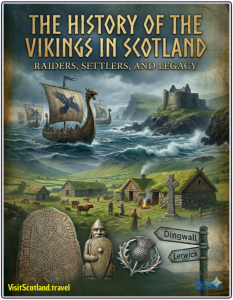 The Viking Age in Scotland began in 793 AD with the devastating raid on the monastery of Iona, an event that shocked Christian Europe and marked the start of two centuries of Norse predation, settlement, and eventual integration.
The first wave (late 8th–early 9th century) was predominantly Norwegian.
Raiders from modern Norway targeted the Northern and Western Isles, exploiting their strategic position on Atlantic trade routes. By the 820s, sustained settlement replaced hit-and-run attacks.
Orkney and Shetland were fully Norse by c. 800; the Hebrides and parts of the mainland coast (Caithness, Sutherland, and the west coast sea-lochs) followed. Norse place-names (virtually 100 % in Shetland, over 90 % in Orkney, and dominant in the Hebrides) and Scandinavian-type burials testify to rapid and thorough colonisation.
Politically, the most enduring creation was the Earldom of Orkney, established c. 870–900 under the Norwegian crown. Earls such as Sigurd the Stout (d. 1014) and Thorfinn the Mighty (c. 1009–c. 1065) ruled a thalassocracy stretching from Shetland to Man and Dublin at its height. The Kingdom of the Isles (Suðreyjar, “Southern Isles”) emerged as a semi-independent Norse-Gaelic lordship under rulers like Godred Crovan (d. 1095) and Somerled (d. 1164), the latter founding the MacDonald Lordship of the Isles.
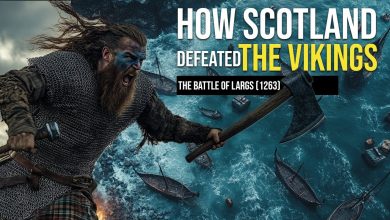
In mainland Scotland, Norse impact was patchier. Caithness and Sutherland remained under Orkney’s earls until 1231. Further south, the Kingdom of Alba (later Scotland) under kings like Constantine II and Malcolm II gradually pushed back Norse influence, culminating in the Scottish annexation of the Hebrides and Man by the 1266 Treaty of Perth, after the failed Norwegian invasion at Largs (1263).
By the 15th century, Norse language and identity had faded, absorbed into Gaelic and Scots culture, yet Viking legacy endures in Scotland’s insular place-names, genetics (especially in Orkney and Shetland), archaeology, and the romanticised image of the seafaring warrior.
Viking Battles
Here are the most significant Viking-related battles and military events on Scottish soil (or directly involving Scotland) during the Viking Age:
| Date | Battle / Event | Location | Outcome & Significance |
|---|---|---|---|
| 795–802 | Repeated raids on Iona | Western Isles | Monasteries plundered multiple times; monks eventually abandon Iona (802–825). |
| 839 | Battle against the Picts | Undisclosed (NE Scotland) | Norse victory; Pictish king Uen and many nobles killed – weakens Pictish kingdom, aiding later Scottish unification. |
| 1014 | Battle of Clontarf (indirect) | Dublin, Ireland | Thorfinn the Mighty’s father, Sigurd the Stout (Earl of Orkney), killed while fighting for Irish high-king Brian Boru’s enemies. Marks turning point in Norse-Gaelic power in the Irish Sea. |
| c. 1040–1050s | Wars against Karl Hundason | Caithness, Sutherland, Deerness (Orkney) | Series of campaigns by Thorfinn the Mighty against a Scottish-backed rival (possibly a mormaer or even Macbeth). Thorfinn victorious at Torfness; consolidates Norse control of Caithness & Sutherland. |
| 1098 | Battle of the Standard (indirect) | Northallerton, England | Magnus Barelegs of Norway, campaigning to re-assert control over the Isles, forces King Edgar of Scotland to cede the Hebrides and Kintyre. |
| 1102–1103 | Magnus Barelegs’ campaigns | Isle of Man & Western Isles | Norwegian king Magnus III re-establishes direct Norwegian rule over the Kingdom of the Isles; killed in ambush in Ulster (1103). |
| 1156 | Battle of the Epiphany (Inverness area) | Moray | Somerled defeats Godred Olafsson of Man; splits the Kingdom of the Isles, creating the independent Lordship of the Isles. |
| 1263 | Battle of Largs | Ayrshire (west coast) | Storm and indecisive fighting scatter Hakon IV of Norway’s fleet. Norway’s last major attempt to retain the Hebrides fails; leads to Treaty of Perth (1266) ceding the Isles to Scotland. |
These clashes shaped the political map: the 1263 defeat at Largs effectively ended centuries of Norwegian dominance in western and northern Scotland.