How DNA Reveals Vikings Never Left Scotland!
The BBC explores how modern genetic evidence challenges the traditional historical narrative that Vikings raided and conquered parts of Scotland in the 8th and 9th centuries before eventually departing.
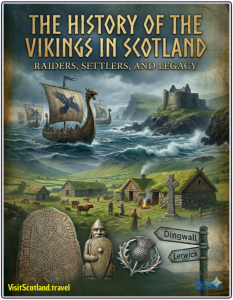 Vikings conquered many of Scotland’s islands, as well as the mainland, in the 8th and 9th Centuries. They came, they conquered, they left, or so the story seemed to go.
Now historians are re-assessing the legacy the Vikings left on islands like Islay, a small island of about 3,000 inhabitants off the west cost of Scotland.
Linguistic and DNA evidence now suggests that the Vikings never really left at all!
Traditional View vs. Genetic Evidence
The BBC Reel short video “Why the Vikings never left Scotland” (2022, presented by Melissa Hogenboom) explores how modern genetic evidence challenges the traditional historical narrative that Vikings raided and conquered parts of Scotland in the 8th and 9th centuries before eventually departing.
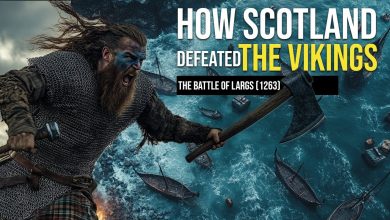
Historians long assumed Vikings came as raiders and settlers but largely withdrew after events like the Battle of Largs in 1263, when Scottish forces defeated a Norse fleet, marking the formal end of Norse political control over many western islands and leading to the transfer of the Hebrides to Scotland in 1266.
DNA analysis reveals a lasting genetic legacy, particularly in Scotland’s islands. Geneticists trace Norse (Norwegian-origin) ancestry through markers on the Y-chromosome (passed from father to son) and mitochondrial DNA (passed from mother to child), comparing modern Scottish populations to Scandinavian baselines.
Key Regions of Viking Influence
- In the Northern Isles (Orkney and Shetland), which were under Norse rule for centuries, up to 25-30% of male lineages show Norse origins, indicating significant settlement and intermarriage rather than temporary raiding.
- On western islands like Islay (in the Inner Hebrides, highlighted in the BBC piece), place names of Norse origin (e.g., those ending in “-ay” from Old Norse “ey,” meaning island) persist alongside detectable Viking DNA in the local population.
- This suggests many Vikings stayed, integrated, and passed on their genes, even as overt Norse governance ended.
Supporting broader studies (including earlier BBC collaborations like the 2001 series Blood of the Vikings) show strong Norse male genetic contributions in former Viking strongholds across Scotland’s islands and coastal areas, while mainland Scotland has less due to different settlement patterns.
In essence, the Vikings “never left” because their descendants became part of the Scottish population, blending Norse and local (Pictish/Gaelic) heritage into the modern genetic makeup of these regions. This evidence, combined with linguistic traces, paints a picture of enduring cultural and biological integration rather than complete withdrawal.