Dunvegan Castle on the Majestic Isle of Skye, Ancestral Home of Chiefs of Clan MacLeod
Far from being a museum piece, Dunvegan remains a living family home, blending medieval grit with Victorian comfort and a palpable sense of myth, magic and Highland defiance.
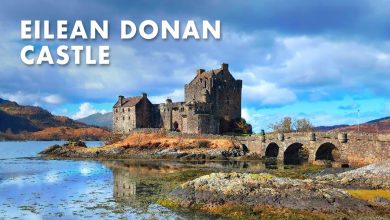
 Perched on a rocky basalt outcrop overlooking Loch Dunvegan on the Isle of Skye, Dunvegan Castle has stood sentinel for over 800 years.
It is the oldest continuously inhabited castle in Scotland and the ancestral seat of the Chiefs of Clan MacLeod for longer than almost any other family seat in Britain.
Far from being a museum piece, Dunvegan remains a living family home, blending medieval grit with Victorian comfort and a palpable sense of myth, magic and Highland defiance.
A Fortress That Grew Organically
Unlike the symmetrical grandeur of many later Scottish castles, Dunvegan evolved piecemeal over centuries. The original 13th-century curtain wall and square keep (built around 1200 by Leod, a son of Olaf the Black, King of Man and the Isles) still form the core. A sea-gate allowed boats to sail right into the base of the rock in early days, making resupply possible even during siege.
Over the centuries the MacLeods added towers, halls, and domestic ranges as needs and wealth dictated:
- 14th–15th centuries: The Fairy Tower was raised.
- 16th century: Rory Mor’s Tower and a new great hall.
- 17th century: The Piper’s Gallery and further ranges after the castle survived sieges during the Wars of the Three Kingdoms.
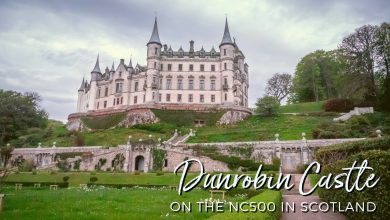
- 1748–1850: Major remodelling in the Scottish Baronial style by the 23rd and 24th Chiefs, including the striking south front with its mock-medieval battlements and pepper-pot turrets we see today.
The result is a wonderfully asymmetrical pile that looks as though it has grown out of the rock itself.
The Three Great Treasures of the World Comes to See
Dunvegan is famous for three extraordinary relics, each steeped in legend:
- The Fairy Flag (Am Bratach Sìth)
A fragile silk banner, yellowed with age and patched in places, said to have been gifted to the 4th Chief by Titania herself, or possibly captured from a Crusader in the Holy Land (scholars argue both origins). Gaelic tradition insists that when unfurled in battle it would multiply the MacLeod forces threefold. It is said to have been used successfully at the Battle of Glendale (1490) and again at Trumpan Church against the MacDonalds in 1580. Only one “unfurling” remains; the clan has vowed never to use the last miracle. - Dunvegan Cup
An exquisite medieval Irish ceremonial cup of bog-oak mounted in silver-gilt, dated 1493 and inscribed with the name of Caitriona, wife of Rory Mór MacLeod. It was a gift from the O’Neills of Ulster and is still used at the inauguration of new chiefs. - Sir Rory Mor’s Horn
A massive ox-horn with silver mounts that holds almost two litres of claret. Tradition demands that every MacLeod heir, on reaching adulthood, must drain it in one draught without falling—a feat that has been accomplished by chiefs (and at least one princess) for 500 years.
Clan MacLeod: Defiance and Survival
The MacLeods of Dunvegan (MacLeods of Harris until the 18th century) were never the largest clan, but they were among the most stubbornly independent.
They fought the MacDonalds for centuries, survived the Jacobite risings without total ruin, and refused to “clear” their tenants during the 19th-century Highland Clearances—a rarity among Skye landlords. Dame Flora MacLeod, the 28th Chief (1951–1976), became a global ambassador for the clan and opened the castle gardens and grounds to the public in 1933, ensuring Dunvegan’s survival in the modern age.
The present chief, Hugh Magnus MacLeod, 30th of MacLeod, still lives in part of the castle with his family.
The Gardens: An Unexpected Subtropical Oasis
Thanks to the Gulf Stream and shelter from the sea cliffs, Dunvegan’s 5-acre gardens are a riot of colour from March to October. Rhododendrons the size of trees, New Zealand tree ferns, Tasmanian eucalyptus, and a famous water garden with waterfalls and wooden bridges create a pocket of almost subtropical lushness on an island otherwise lashed by Atlantic gales. The Walled Garden, originally laid out in 1770, still grows fruit and vegetables for the castle kitchen.
Visiting Today
Dunvegan Castle & Gardens is open to the public from late March to mid-October (and limited winter openings for the castle interior). Visitors can:
- Explore five floors of the castle with guides in every room.
- Take a boat trip on Loch Dunvegan to see the seal colony that lives beneath the castle walls (the MacLeods have protected the seals for centuries).
- Wander the gardens and woodland walks.
- Enjoy coffee or lunch in the MacLeod Tables café, named after the flat-topped hills visible across the loch where the 13th Chief supposedly entertained a visiting king.
A Living Legend
Few places in Scotland feel as alive with story as Dunvegan. You can stand on the sea-gate battery and almost hear the pipes echoing off the water, touch the worn stone that generations of MacLeods have climbed, and—if you’re lucky and the light is right—catch a glimpse of silken tatters of the Fairy Flag in its glass case and wonder whether the old magic still holds.
For over eight centuries the chiefs of MacLeod have kept the light burning on this rocky shore. As their clan motto proudly declares: Hold Fast. At Dunvegan, they most certainly have.